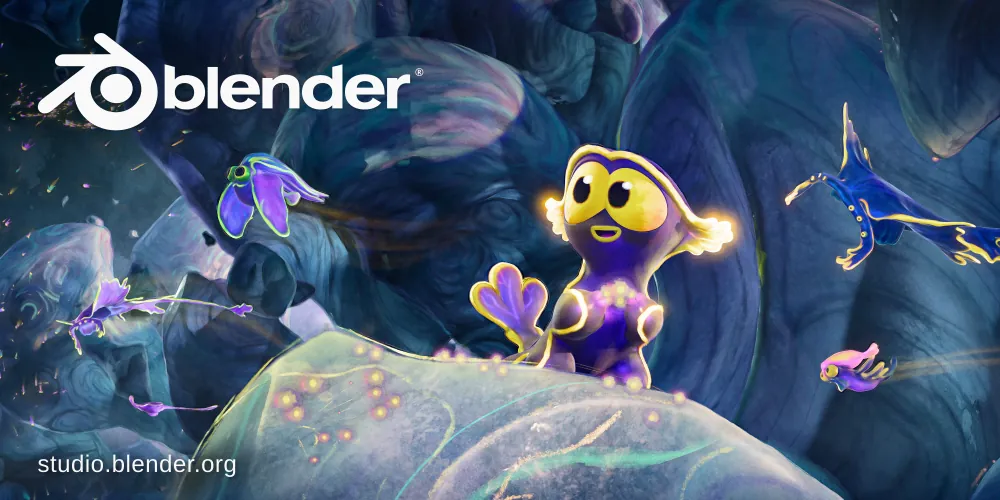
Blender matters because 3D work rarely stays inside one narrow box for long. A project that begins as simple modeling often expands into lighting, animation, rendering, compositing, or simulation, and switching tools for every stage can slow learning as much as it slows production. Blender stays valuable because it gives creators one broad workspace that can support that progression.
It is most suitable for 3D artists, motion designers, indie game creators, technical visualizers, and curious learners who want a capable Windows tool they can actually keep using as projects become more demanding. If you work across modeling, animation, or rendering rather than only touching one isolated task, Blender fits that long-term workflow well.
What makes it worth installing is depth with flexibility. You can start with simple objects and gradually move toward more complex scenes, character work, procedural setups, or rendering pipelines without immediately outgrowing the software. That makes Blender especially strong for self-directed learning and small teams with limited budgets.
The tradeoff is obvious: Blender has a real learning curve. A broad toolset means more interface complexity, more concepts, and more chances to feel lost at first. The grounded way to approach it is to learn one practical workflow at a time, not to master the whole application in the first week. Used that way, Blender becomes much more approachable.