Frase
Category AI Office
Published 2026-04-05

Overview

This section highlights the core features, use cases, and supporting notes.

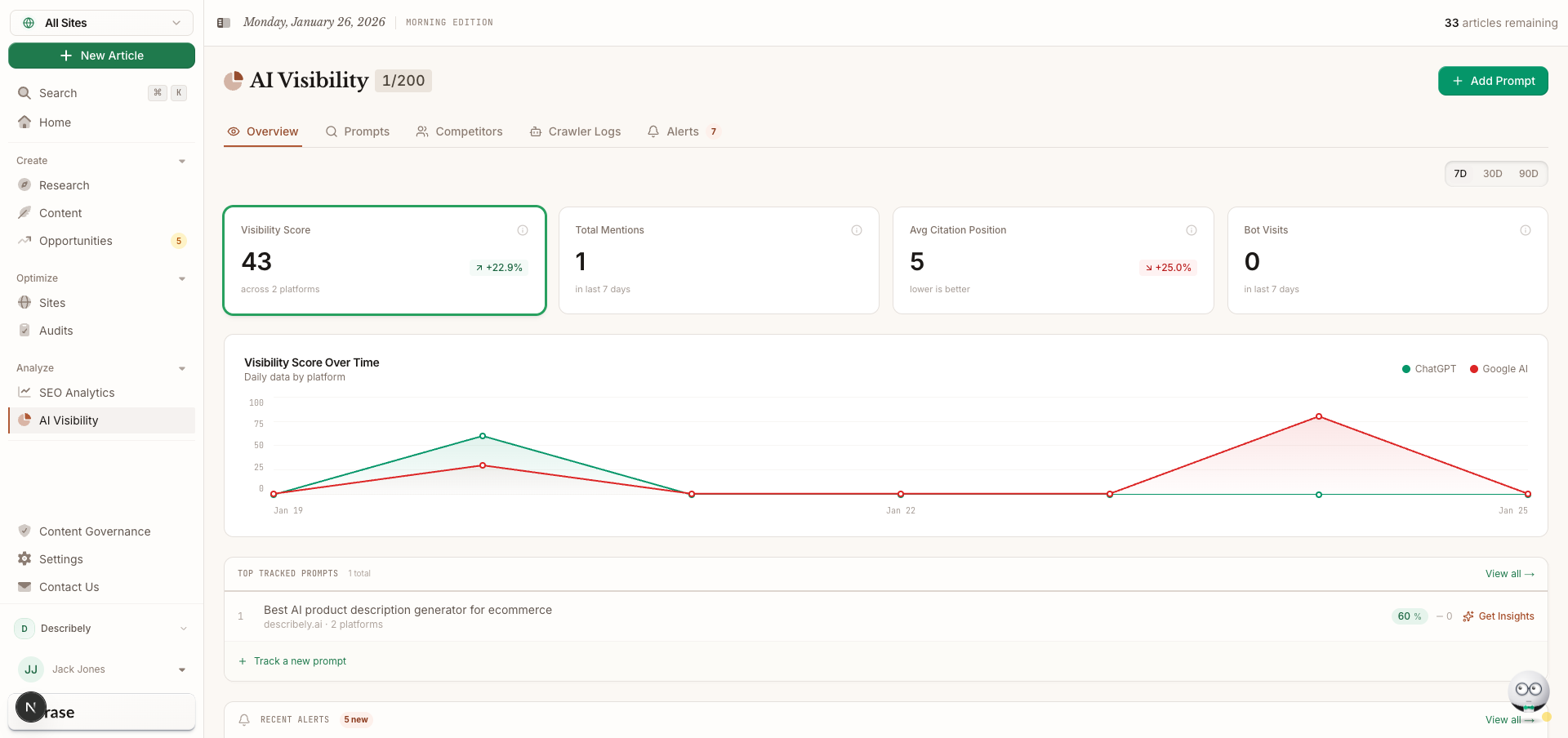
Frase is an agentic SEO and GEO platform for teams that want market research, search-informed content creation, and AI-answer visibility tracking in one workflow. It is most useful when the goal is not only to publish content, but to improve how that content performs across Google and AI answer systems.

Frase now sits at the intersection of research, SEO content production, and visibility tracking across AI-driven answer surfaces. Its value comes from helping teams connect topic research, optimized writing, and discoverability in a way that fits modern content operations more closely than a simple writer does.

It suits SEO teams, content strategists, agencies, and growth teams that need to rank on search and stay visible in AI answer ecosystems. The fit becomes strongest when content planning and performance are tightly connected.

What makes Frase worth attention is that search content work is becoming more fragmented. A platform that keeps research, generation, optimization, and AI-era visibility closer together can help teams act faster and with more continuity.

The tradeoff is that search-oriented tooling can push teams toward over-optimization if they forget the reader. Content still needs to answer real questions clearly, or any ranking or citation gain becomes weak over time.

This site recommends Frase for teams that want a more complete search-content workflow instead of separate research, writing, and tracking tools. Start with one topic cluster or article workflow, then keep it if the platform improves both content planning and visibility outcomes.

Setup / Usage Guide

Installation steps, usage guidance, and common notes are maintained here.

  1. Open Frase from the official site and begin with one topic you already care about ranking or being cited for. A concrete search target makes the platform easier to evaluate.
  2. Use the research layer before drafting anything. Good SEO and GEO work starts with market understanding, not with immediate content generation.
  3. Build or review the content structure before writing the full article. Search-driven content performs better when the outline is intentional.
  4. Check whether the generated material still sounds useful to a real reader. Optimization should improve usefulness, not replace it.
  5. Use visibility tracking to compare how the topic performs after publication or update. Measurement is part of the product value here.
  6. Review AI-answer visibility with caution. Being cited matters, but not if the underlying page becomes thin or repetitive.
  7. Keep a human editorial pass in the loop. Search platforms are strongest when paired with genuine subject-matter judgment.
  8. Keep Frase if it helps your team connect research, content creation, and visibility tracking in a way that produces clearer search results over time. That is the strongest case for keeping it.

Related Software

Keep exploring similar software and related tools.