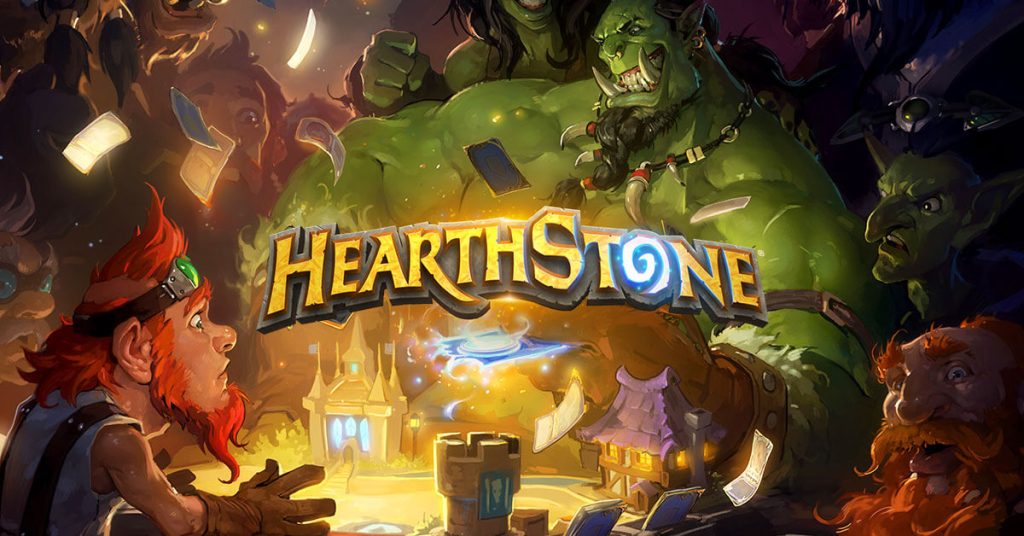
The current English page for Hearthstone needs a sharper rewrite because the official materials checked on April 20, 2026 show a broader and more current product than a thin description of deckbuilding and ranked play. The official homepage still frames Hearthstone as a fast-paced Strategy Card Game, keeps the Free to Play positioning visible, and lists support across PC, Mac, iPad, and iOS and Android mobile phones. That matters because Hearthstone is still being positioned as a live multi-device platform, not as a retired card game that only survives through old reputation.

The official download path also says a lot about how Hearthstone should be judged today. The desktop download route checked on April 20, 2026 leads into the official Battle.net installer flow rather than into a disconnected standalone package. On Windows and Mac, that means updates, sign-in, patch delivery, and launching are tied to Blizzard’s maintained client. Mobile players can still start from the official game hub and move into the store links there, but desktop Hearthstone is clearly meant to live inside Battle.net.

The official browser tools are another reason Hearthstone still deserves a stronger page than it has now. The Hearthstone Card Library is not filler. Its official description says players can Explore the latest cards and discover your next big idea! and the current page data checked during this run keeps CATACLYSM visible as the active set context. For a live card game, that matters. A recommendation is much stronger when players can inspect current cards and set context before spending dust, copying lists, or walking into a stale guide.

The official Deck Builder pushes that point further. Blizzard’s own tool says players can build new decks from scratch or import existing deck codes, customize them, share decks online, or copy the code into the game and start playing. That is useful judgment value because it shows how much of modern Hearthstone now happens before the match starts. Planning, importing, sharing, and iterating on lists are part of the real workflow, and the official site supports that directly.

The official Battlegrounds page is just as important for understanding what Hearthstone is in 2026. It lets players browse Battlegrounds minions, quests, rewards, anomalies, and spells. That means Hearthstone is not only a classic thirty-card game anymore. It is also a maintained auto-battler platform with its own systems, update language, and browsing surface. This broadens the game’s fit for players who like Blizzard card-game structure but do not want to start by collecting and piloting a ladder deck.

The current expansion state is also clear in the official set pages. The Cataclysm expansion page says Deathwing has returned from a timeline where he never fell, highlights the Herald and Shatter mechanics, and keeps CATACLYSM framed as a released live set instead of a vague future promise. This matters because Hearthstone should be judged through the concrete set that players are walking into now, not through a generic promise that card games keep getting expansions forever.

The official expansion announcement adds the rollout facts behind that set. Blizzard’s Deathwing Strikes Back in CATACLYSM, Hearthstone's Next Expansion article is dated February 9, 2026 and says the expansion launches on March 17. It also introduces the first-ever Deathwing Hero Card, explains how Herald works, explains Shatter, highlights the Legendary Dragon Aspects, and sets the pre-release Tavern Brawl window from March 10 to March 17. Those details matter because they turn CATACLYSM into a real live-service release trail rather than a cinematic theme.

The same live-service logic applies to Battlegrounds. Blizzard’s Announcing Battlegrounds Season 13: CATACLYSM CALLS! article is dated April 6, 2026 and says Season 13 begins on April 14 at 10:00 a.m. PDT. It brings back Trinkets, removes Anomalies and the Timewarped Tavern when the season starts, resets ratings, updates the rewards track, and says the Season Pass gives +2 Hero options at the start of each game. That makes Hearthstone easier to recommend to live-game players, but it also makes clear that old Battlegrounds guides can go stale quickly.

The patch trail reinforces that live maintenance keeps moving after the headline beats. The official 35.0.3 Patch Notes post is dated April 2, 2026 and says the patch brings updates for Hearthstone, Battlegrounds, and more. It specifically says Blizzard brought back the Money Match and Golganneth's Tempest Anomalies after hearing they were missed. That is useful because it shows concrete follow-up work, not just expansion launches and bundle promotion.

Hearthstone’s maintenance story is not only about modes and expansions. The official 34.2 Patch Notes: Events and Features article, dated December 1, 2025, says this post covers events and new features while a separate companion blog handles Battlegrounds, Arena, bug fixes, and gameplay updates. It also details Signature cards becoming easier to read and better presented across the Collection Manager and Arena. That matters because it shows ongoing client and collection work beyond card reveals and monetized content.

Our grounded judgment is that Hearthstone is strongest for players who enjoy repeated deck iteration, class identity, official deck-code and card-library tools, and the option to alternate between traditional Hearthstone and Battlegrounds inside one official Blizzard client. It is weaker for players who dislike collection pressure, live-balance churn, seasonal resets, or the need to keep up with current expansions and patches. Judged on the official materials available on April 20, 2026, Hearthstone still deserves a place because Blizzard’s official pages, expansion state, browser tools, Battlegrounds season updates, and patch notes all show a card platform that is still active, still maintained, and still worth installing if you want an evolving strategy game rather than a fixed one-time ruleset.