
Overview

This section highlights the core features, use cases, and supporting notes.

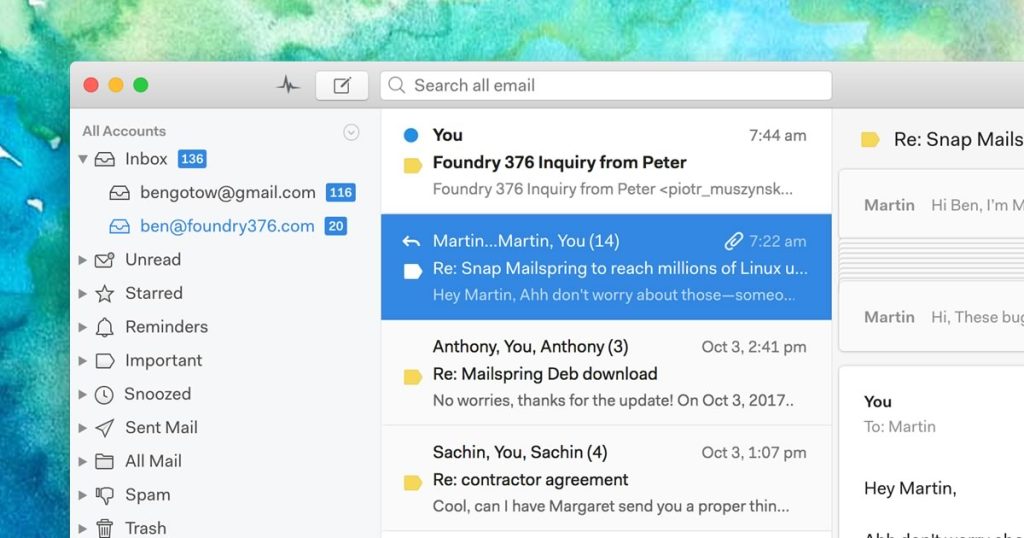
Mailspring is a desktop email client for users who need to manage mail from a dedicated Windows client instead of living entirely in browser tabs. It is best suited to users who want a cleaner focused mail workflow on the desktop. The main reason to keep it is that it is most valuable when you process mail often enough to care about a dedicated client experience. The expectation to lower is that it matters less if webmail already covers your full routine comfortably. A practical first test is to connect one account and test sync, compose, and search behavior on real messages.

The current English page for Mailspring should help users decide whether they really need this desktop email client, not just repeat a generic marketing line. The official materials checked on April 28, 2026 matter because they show a clearer path around manage mail from a dedicated Windows client instead of living entirely in browser tabs. That makes Mailspring a better fit for users who want a cleaner focused mail workflow on the desktop than for people who rarely touch email outside a browser.

Annotated reference image based on the official Mailspring page showing the product's positioning and real workflow scope
The official page matters because it clarifies what Mailspring is really for before users commit time, data, or workflow changes.

The official site is where the real decision should begin. Mailspring is easier to judge honestly when you look at whether it actually helps users manage mail from a dedicated Windows client instead of living entirely in browser tabs. That perspective is more useful than a vague software label because the strongest audience is users who want a cleaner focused mail workflow on the desktop, while people who rarely touch email outside a browser may not need this level of tooling at all.

Annotated reference image based on the official Mailspring download or access page showing the safest first-run path
The official download or access path matters because first-run clarity usually decides whether a tool becomes part of a stable workflow.

The first-run path deserves more attention than many users give it. Starting from the vendor-controlled download or access entry keeps the setup cleaner, makes later updates easier to trust, and lowers the chance of building habits around stale packages or incomplete mirrors. A practical first test is to connect one account and test sync, compose, and search behavior on real messages so the evaluation stays tied to a real task instead of a vague impression.

Annotated reference image based on the official Mailspring workflow fit view showing retention value, tradeoffs, and realistic expectations
The workflow view matters because software is worth keeping only when the retention value survives real work and not just a quick trial.

The strongest case for keeping Mailspring is that it is most valuable when you process mail often enough to care about a dedicated client experience. At the same time, the main expectation to lower is that it matters less if webmail already covers your full routine comfortably. That is why the keep-or-skip decision should come after one honest task cycle. If the software does not help after a real test, it is better to remove it early than to leave another idle tool in the stack.

Our grounded judgment is that Mailspring is most worth keeping for users who want a cleaner focused mail workflow on the desktop who genuinely need to manage mail from a dedicated Windows client instead of living entirely in browser tabs. It is a weaker fit for people who rarely touch email outside a browser. If you try it, make the decision after connect one account and test sync, compose, and search behavior on real messages rather than after a homepage-only impression.


Setup / Usage Guide

Installation steps, usage guidance, and common notes are maintained here.

The best way to judge Mailspring on Windows is to start from the official path, keep the first test small, and check whether it really helps you manage mail from a dedicated Windows client instead of living entirely in browser tabs. The official pages reviewed on April 28, 2026 are useful because they give a safer start point than mirror sites or a recycled third-party package page.

  1. Open the official source first. Start from https://www.getmailspring.com/ or the official site linked on this page so you do not begin with an outdated mirror.
  2. Prefer the main stable Windows path. If the vendor offers multiple builds, choose the standard option unless you already know you need a portable, nightly, or specialty package.
  3. Read the basic product positioning before installing. This matters because Mailspring is most useful when you actually need to manage mail from a dedicated Windows client instead of living entirely in browser tabs.
  4. Install or extract it into a location you can keep. A predictable tools folder is usually better than a throwaway test path if the software ends up being useful.
  5. Launch it once with a small test task. Do not migrate your full workload on day one. A narrow first task is enough to judge fit.
  6. Use one real example quickly. A practical first test is to connect one account and test sync, compose, and search behavior on real messages.
  7. Adjust only the settings that affect daily use. Focus on save paths, interface basics, update behavior, or account connection if the product actually needs them.
  8. Bring in a small piece of your real workflow. One folder, one file set, one message source, or one research item is enough to see whether the product holds up outside a demo.
  9. Pay attention to the main tradeoff. The expectation to lower here is that it matters less if webmail already covers your full routine comfortably.
  10. Decide whether it deserves a permanent place. Keep it only if it is most valuable when you process mail often enough to care about a dedicated client experience shows up in real use, not just on the first impression.

A practical Windows setup usually means keeping the install path clean, testing one representative task early, and only treating Mailspring as part of your normal toolkit after it proves useful on real work instead of a synthetic trial.

Related Software

Keep exploring similar software and related tools.