Writesonic
Category AI Office
Published 2026-04-05

Overview

This section highlights the core features, use cases, and supporting notes.

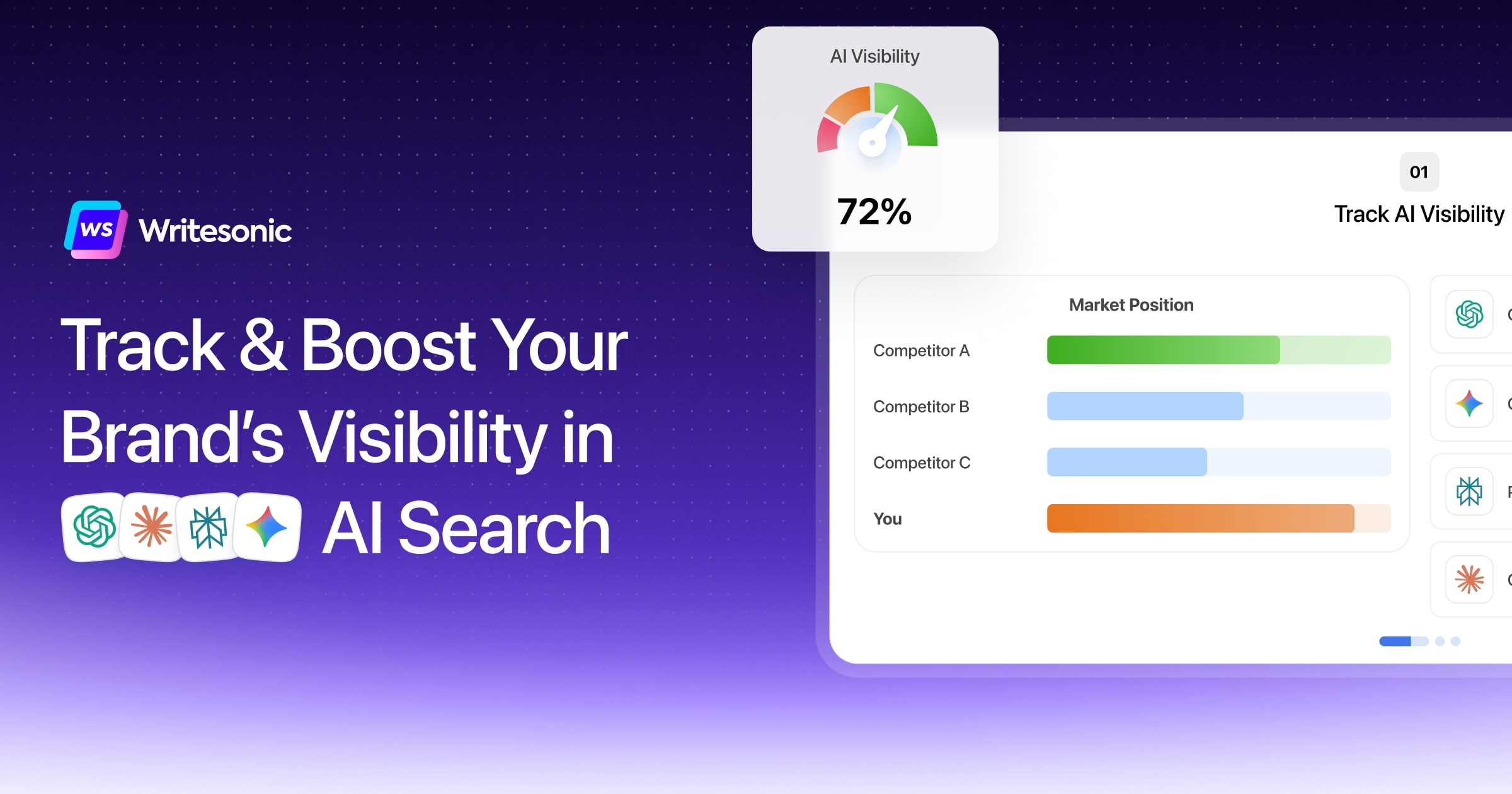
Writesonic is an AI visibility and content optimization platform for teams that want to track how brands appear across ChatGPT and other AI answer systems while improving content accordingly. It is most useful when the goal is not only writing faster, but understanding and improving search and answer-surface visibility in the AI era.

Writesonic now sits closer to AI search visibility and content optimization than to a basic copywriting assistant. Its value comes from helping teams track mentions, spot citation gaps, and connect content work more directly to how AI systems surface information.

It suits SEO teams, growth teams, content marketers, agencies, and brand operators who care about discoverability across both traditional search and AI-driven answer environments. The fit becomes strongest when content performance is measured by visibility, not just by publication volume.

What makes Writesonic worth attention is that AI answer systems are changing where brands get seen. A platform that connects tracking, content refresh, and visibility improvement can help teams adjust faster than a workflow built only around blog drafting.

The tradeoff is that visibility-focused tools can tempt teams into chasing exposure metrics at the cost of usefulness. Content still needs to serve real readers well, or any short-term optimization gain becomes fragile.

This site recommends Writesonic for teams that take AI-era search visibility seriously and want more than generic content generation. Start with one tracked topic or brand area, and keep it if the platform helps you connect content work to measurable visibility outcomes.

Setup / Usage Guide

Installation steps, usage guidance, and common notes are maintained here.

  1. Open Writesonic from the official site and begin with one brand topic or content area you already care about. A focused visibility problem is easier to evaluate than a broad platform tour.
  2. Review how the platform tracks AI visibility or mentions before generating new content. Measurement should come first if visibility is the real goal.
  3. Identify one citation gap or weak content area from the returned data. A visibility tool is most useful when it points to a concrete action.
  4. Use the content workflow to improve that specific gap instead of producing generic volume. Better targeting matters more than more pages.
  5. Check whether the suggested content still sounds useful to human readers. AI-surface optimization should not make the page worse for real users.
  6. Monitor whether the updated content changes visibility over time. The practical value comes from measurable movement, not from a nice dashboard alone.
  7. Be cautious with over-optimization. Chasing every possible mention can make content thin and interchangeable if judgment disappears.
  8. Keep Writesonic if it helps your team connect visibility tracking, content updates, and real search impact more clearly than your current workflow. That is the strongest case for keeping it.

Related Software

Keep exploring similar software and related tools.