Overview

This section highlights the core features, use cases, and supporting notes.

Flowise is a visual AI agent builder for teams and developers who want to assemble chat assistants, multi-agent flows, retrieval pipelines, and production-facing automation without writing every orchestration step from scratch. Its real value is the combination of visual iteration, deployment-minded features, and a clearer path from prototype to embedded product workflow.

Flowise is easier to judge honestly if we treat it as a visual orchestration layer for AI agents, not as a one-click magic bot generator. On April 14, 2026, the official site at flowiseai.com publicly positioned the product around building AI agents visually, then highlighted concrete categories such as multi agents, chat assistants, human-in-the-loop workflows, execution traces, API and embed support, and production scale. That mix tells us who Flowise is really for: teams, builders, and operators who want more control than a basic chat app, but do not want to hand-code every workflow from zero.

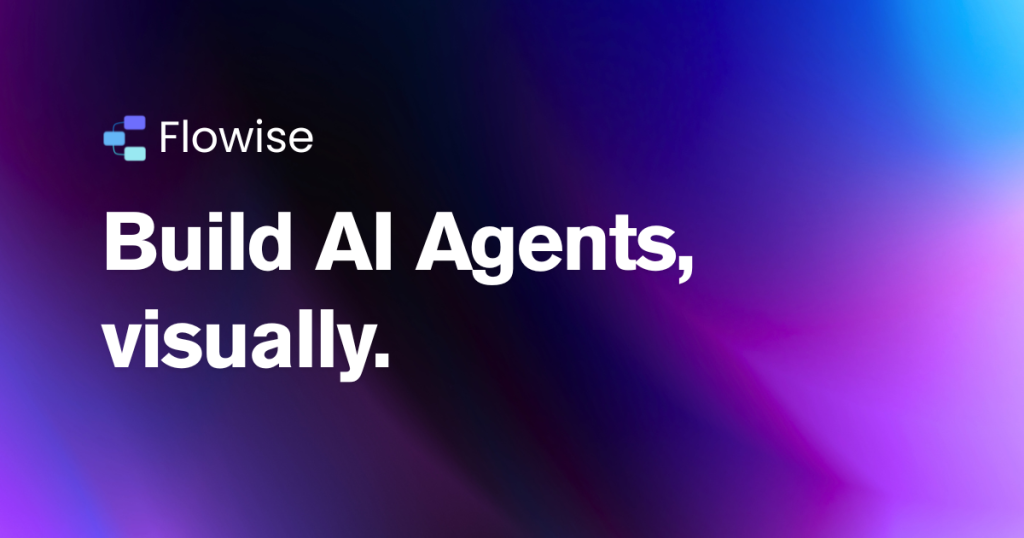
Annotated screenshot of the official Flowise homepage hero
The hero matters because Flowise is explicitly selling visual AI-agent construction rather than generic chat.

The homepage sections show why Flowise stands out in searches for visual AI agent builder, drag-and-drop LLM workflow builder, or open-source agent orchestration tool. Multi Agents and Chat Assistants signal that Flowise is meant for more than one assistant pattern. That makes it relevant for teams building retrieval assistants, support copilots, internal workflow agents, or multi-step pipelines that need branching logic and role separation.

Annotated screenshot of the official Flowise multi agents section
Multi-agent support matters because Flowise is aimed at orchestrated workflows, not just single-prompt assistants.
Annotated screenshot of the official Flowise chat assistants section
Chat assistants are still a core entry point, especially for teams starting with retrieval or task-specific copilots.

The more practical signals for serious use are Human In the Loop and Execution Traces. Those sections matter because real agent workflows break in messy ways: tools fail, prompts drift, and outputs need review. Flowise is more credible when it acknowledges that people still need approval steps and that teams need observability when something goes wrong. Users looking for an AI agent builder for production or a LangChain-style visual workflow tool should care more about these signals than about flashy demos alone.

Annotated screenshot of the official Flowise human in the loop section
Human-in-the-loop support is useful because many business workflows still need review gates or approval steps.
Annotated screenshot of the official Flowise execution traces section
Execution traces matter because debugging is where many agent projects succeed or fail.

The integration story is equally important. API, SDK, Embed and Production Scale make Flowise more than a canvas toy. These sections tell us the platform is trying to support real app embedding, external product integration, and larger deployment scenarios. That is why Flowise can be a good fit for startups, internal platform teams, and developers who need a visual agent builder with API output, not just a demo interface for local experimentation.

Annotated screenshot of the official Flowise API SDK and embed section
API, SDK, and embed support are what make Flowise relevant for product teams, not only solo tinkerers.
Annotated screenshot of the official Flowise production scale section
Production-scale positioning is useful because it sets expectations beyond a simple prototype builder.

The public documentation also adds real value. The official Get Started page exposes several setup paths, including cloud, quick start, Docker, developer-focused setup, and enterprise directions. That is helpful because Flowise is not a one-size-fits-all install. Some users want a hosted cloud entry, while others want self-hosted Docker or developer-first control. A page about Flowise should say that clearly instead of pretending there is only one correct way to begin.

Annotated screenshot of the official Flowise get started documentation page
The getting-started docs matter because they show multiple real onboarding paths, not one narrow install route.

Our grounded judgment is that Flowise is most worth trying for builders and teams who need to design, test, and iterate AI workflows visually while still caring about integration, review checkpoints, and debugging. It is less suitable for users who only want a simple end-user chatbot or who expect visual tooling to remove the need for architecture decisions entirely. Flowise can reduce build friction, but it still rewards users who understand workflow design, model behavior, and deployment tradeoffs.
Setup / Usage Guide

Installation steps, usage guidance, and common notes are maintained here.

The best way to start with Flowise is to decide whether you want a managed cloud entry or a more self-hosted developer path before you build anything.

  1. Open the official website at https://flowiseai.com/ and read the homepage sections with one question in mind: are you trying to build a real workflow, or do you only need a finished chatbot product someone else already made?
  2. Use the official Get Started documentation at https://docs.flowiseai.com/getting-started before you pick a setup route. The docs publicly expose cloud, quick start, Docker, developer, and enterprise directions.
  3. If you want the fastest official entry, the public homepage Get Started path led to https://cloud.flowiseai.com/signin during this run. That is the clearest first stop for users who want the hosted route.
  4. If you prefer more control, read the Docker and developer sections in the docs before deployment. Flowise is easier to maintain when you understand the setup path instead of treating visual tooling as a shortcut around infrastructure choices.
  5. Define one concrete first workflow before opening the builder. Good starting points are a retrieval chat assistant, a support copilot, a document question-answering flow, or a simple internal task chain. Do not begin with a giant multi-agent ambition if you have not validated one small path yet.
  6. Use the chat-assistant path when your goal is a narrow user-facing assistant. Use the multi-agent path only when you already know why several specialized roles or steps improve the result.
  7. Add human review where mistakes are costly. Flowise publicly emphasizes human-in-the-loop for a reason: approvals, edits, and manual checks are often necessary in production workflows.
  8. Watch execution traces early. Tracing is not a late optimization feature; it is one of the fastest ways to understand where prompts, tools, context windows, or external integrations are breaking.
  9. Test API, SDK, or embed paths only after the base workflow works reliably inside the builder. Integration adds complexity, so you want a stable flow before you expose it to another product or team.
  10. If you expect real traffic or team usage, review the production-scale implications before rollout. A working demo is not the same as a maintainable service.
  11. Keep your prompts, tool definitions, credentials, and deployment notes organized outside the canvas too. Visual builders reduce friction, but they do not eliminate the need for operational discipline.
  12. Lower expectations in one important area: Flowise can speed up agent construction, but it does not remove the need to understand models, tools, evaluation, and failure handling.
  13. Decide whether Flowise belongs in your workflow based on one practical question: does the visual builder help your team iterate and debug faster than code-first orchestration alone, without hiding too much important behavior?

A practical long-term Flowise setup usually looks like this: choose the official cloud or self-hosted route deliberately, start with one narrow workflow, add human review where it matters, rely on traces for debugging, integrate only after the flow is stable, and treat the visual canvas as a productivity layer rather than a substitute for sound workflow design.

Related Software

Keep exploring similar software and related tools.