Me.bot
Category AI Chat
Published 2026-04-05

Overview

This section highlights the core features, use cases, and supporting notes.

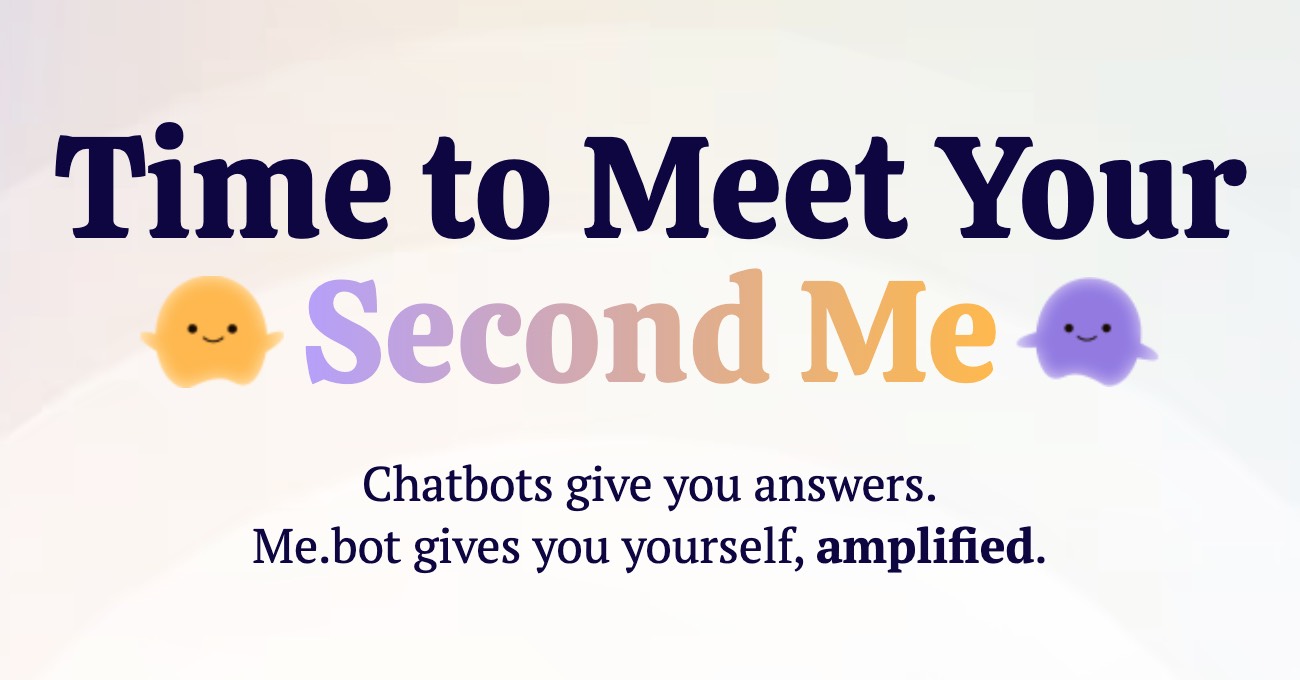
Me.bot is a personal AI companion for users who want memory, self-expression, and lightweight assistance to stay connected over time instead of resetting with every new chat. It is most useful when the goal is to capture ideas, preferences, and recurring context so a more personalized 'second me' can respond with continuity.

Me.bot is more about continuity than about isolated answers. The product direction suggests a personal layer that can remember context, reflect your preferences, and support a more individualized relationship with the assistant over time.

It fits users who want a personal companion for thoughts, reminders, ongoing preferences, or creative self-expression rather than a purely task-driven chatbot. The appeal is strongest for people who want their AI tool to feel cumulative instead of disposable.

What makes Me.bot worth attention is that memory can be a real product advantage when it is handled well. A system that remembers what matters can reduce repetition, help recover ideas, and make later interactions more relevant than generic chats usually are.

The tradeoff is that personal memory tools require sharper privacy judgment. The more helpful the memory becomes, the more carefully users should decide what deserves to be stored, repeated, or turned into a digital version of themselves.

This site recommends Me.bot for users who want a personal AI layer with continuity, not only a one-time answer box. Start small, test what it remembers, and keep it only if the personalization helps without asking you to surrender too much control.

Setup / Usage Guide

Installation steps, usage guidance, and common notes are maintained here.

  1. Open Me.bot from the official site and decide what role you want it to play first. Personal notes, gentle reminders, memory support, or expressive chat each create different expectations.
  2. Start by giving it a few low-risk pieces of information rather than your full life context. A memory product should earn trust gradually.
  3. Test whether it can recall and use that context appropriately in later prompts. Continuity is the main thing you are evaluating here.
  4. Use one real recurring need such as idea capture or preference recall. A concrete habit is the fastest way to see whether the tool deserves a place in your routine.
  5. Review any voice or self-expression features only after the memory layer feels useful. Presentation features matter less if the continuity is weak.
  6. Delete or avoid storing sensitive content until you understand the product boundaries well. Personalization is helpful only when privacy judgment stays in your hands.
  7. Notice whether the tool reduces repetition across several sessions. That accumulated benefit is what separates a memory companion from a normal chatbot.
  8. Keep Me.bot if it becomes a trusted place for recurring context without demanding more personal exposure than you are comfortable with. That balance is what matters most.

Related Software

Keep exploring similar software and related tools.