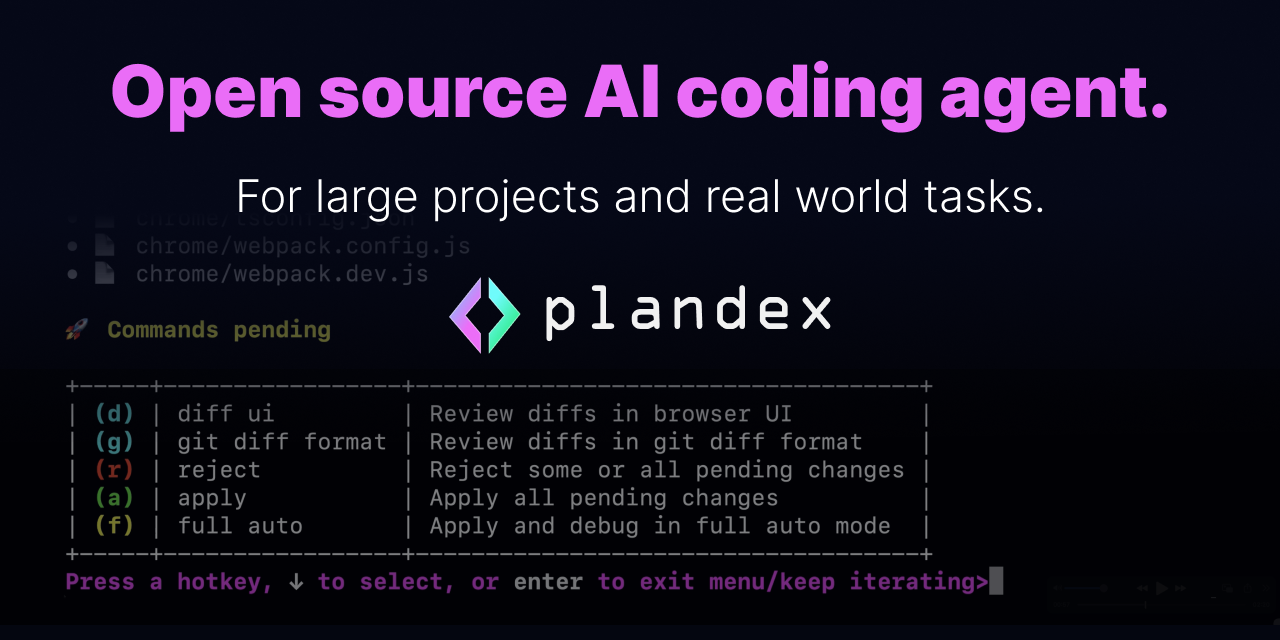
Plandex matters because it is explicitly designed for large tasks. Its official positioning around terminal-based work and real-world projects makes it more relevant for substantial software changes than for small one-file experiments.
It suits developers who work on ongoing repositories and need AI help that can stay engaged across planning, editing, and repeated iterations. If your tasks usually outgrow simple prompt-and-paste workflows, Plandex is pointed at that complexity.
The value is persistence over longer development chains. Many coding tools feel capable on tiny tasks but break down when requirements widen and project context accumulates. A tool built for larger tasks can be much more practical in real engineering work.
The tradeoff is that bigger task scope increases the risk of subtle mistakes. Terminal-based coding agents still need code review, test discipline, and developer oversight if they are going to be trusted on meaningful changes.
A sensible evaluation is to try Plandex on one multi-step task that would usually force you back and forth between notes, chat, and the terminal. If it helps keep the work coherent over time, then it is likely solving a real problem.