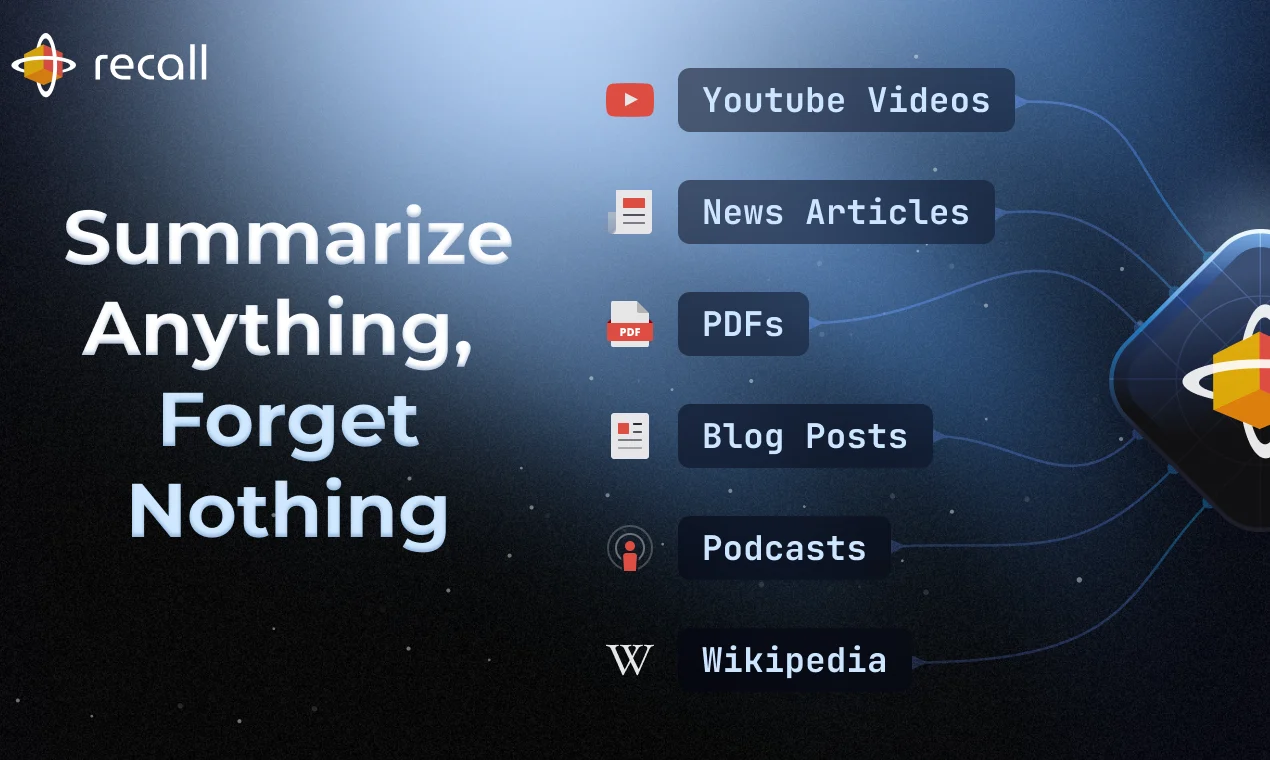
Recall is built around long-term information reuse rather than one-off summaries. Its value comes from turning scattered content into a knowledge base that stays easier to search, revisit, and connect over time.
It suits learners, researchers, creators, and knowledge workers who consume a lot of articles, videos, and reference material but struggle to turn that input into something they can recover and build on later.
What makes Recall worth attention is that information overload usually fails after the moment of discovery. A tool that converts content into a growing personal reference layer can improve retention and reuse if users actually return to it.
The tradeoff is that summarizing and storing everything can easily become another form of hoarding. A better memory system only helps when it supports understanding and retrieval instead of becoming a prettier archive.
This site recommends Recall for users who want more durable knowledge retention across what they read and watch. Start with one topic you are actively learning, then keep it if the tool helps your saved material become easier to reuse instead of easier to ignore.