
Research Rabbit
Category AI Office
Published 2026-04-05

Overview

This section highlights the core features, use cases, and supporting notes.

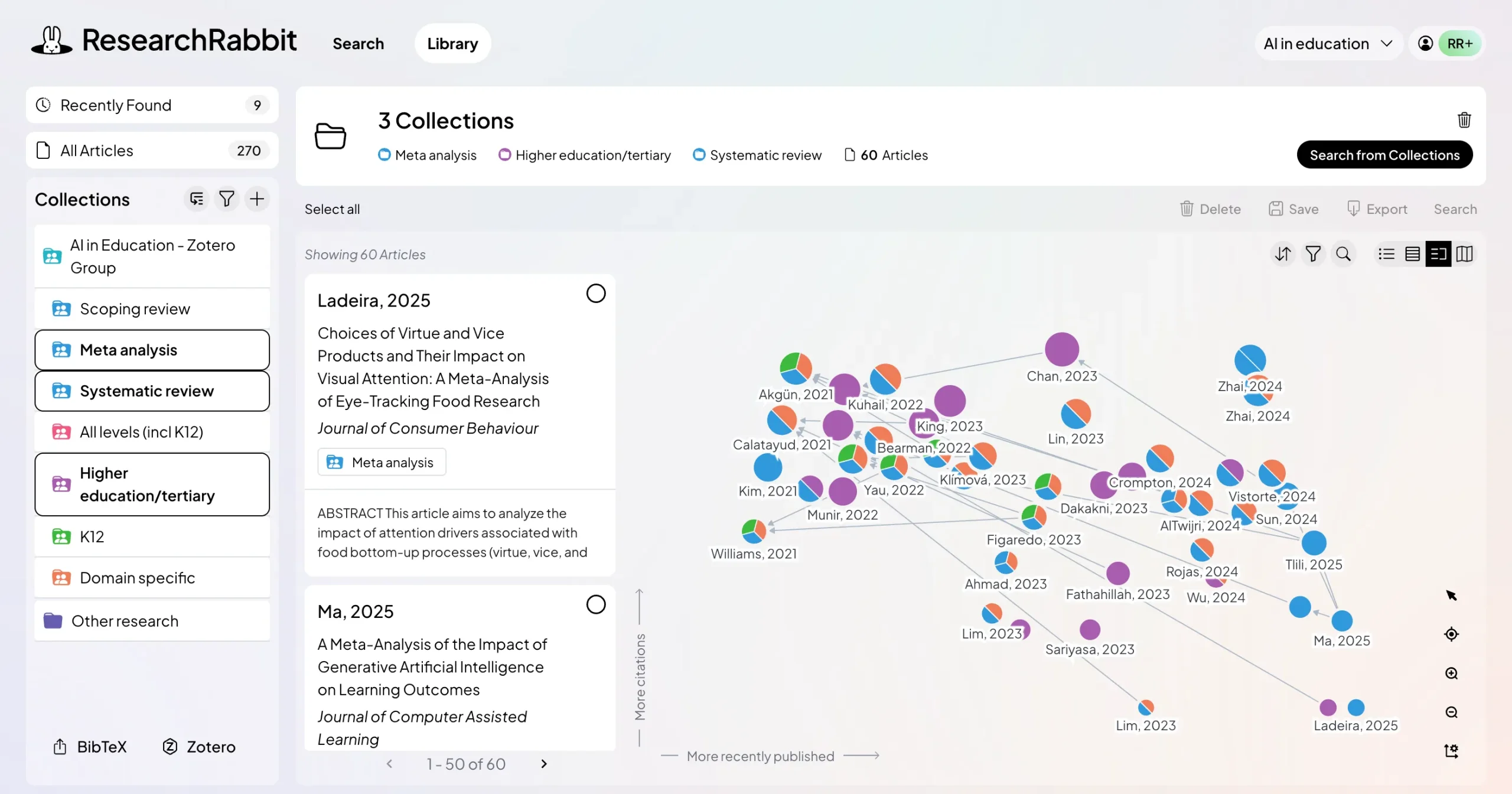
Research Rabbit is a literature discovery and tracking tool for researchers who want paper collections, recommendation loops, and research monitoring to stay alive over time instead of ending after one search session. It is most useful when the work involves following a topic continuously rather than only finding a few papers once.

Research Rabbit is built around ongoing literature tracking, not only one-time discovery. Its value comes from helping users collect papers, watch a research area evolve, and keep their reading workflow active as new work appears.

It suits graduate students, research teams, and long-term academic projects where the literature keeps moving. The fit becomes strongest when users need a living research workflow rather than a one-off search result.

What makes Research Rabbit worth attention is that literature review often becomes messy after the first week. A tool that supports collections, connections, and continued discovery can reduce the friction of staying current.

The tradeoff is that recommendation systems can still steer users toward familiar neighborhoods if they stop checking beyond the obvious network. Long-term discovery still needs deliberate breadth and critical judgment.

This site recommends Research Rabbit for people who need sustained paper tracking rather than only search acceleration. Start with one topic collection, then keep it if the platform makes your research monitoring more organized and less fragmented.


Setup / Usage Guide

Installation steps, usage guidance, and common notes are maintained here.

  1. Open Research Rabbit from the official site and build one focused collection first. A clear topic or project area makes the tool much more useful.
  2. Add a few known relevant papers before expecting strong recommendations. The quality of the initial signal affects the rest of the workflow.
  3. Review suggested papers with a broad mindset. Recommendation tools are most useful when they expand your view instead of narrowing it further.
  4. Use collections to separate themes or subtopics early. Good organization matters more in long-running projects than in quick searches.
  5. Check whether the tool helps you revisit literature over time. Its real value appears in continuity, not in one dramatic first session.
  6. Compare recommended papers against what your normal search process would have found. This tells you whether it is actually adding discovery value.
  7. Keep notes on why papers were saved, not only that they were saved. A tracking tool is better when it supports later reasoning, not just storage.
  8. Keep Research Rabbit if it helps your literature review stay current and navigable across weeks or months of work. That is the main reason to keep it.

Related Software

Keep exploring similar software and related tools.