Overview

This section highlights the core features, use cases, and supporting notes.

Sudowrite is most useful when it is judged as a fiction-writing partner instead of as a generic AI productivity tool. The official homepage, Muse page, FAQ, pricing page, plugins page, AI Novelist page, Writing Assistant page, Creative Writing Assistant page, Story Generator page, and Privacy Policy checked on April 18, 2026 all point to a product built for authors who are trying to keep novels, scenes, outlines, and character arcs moving. That positioning matters because Sudowrite's own materials do not frame it around office copy, factual research, or lightweight grammar cleanup. The Muse page calls Muse the only AI model made for fiction. The AI Novelist page says a story idea can become 10 chapter outlines and 2 to 3 character arcs. The writing pages repeatedly target fiction writers, story development, and plot structure instead of generic text production. What keeps Sudowrite worth considering is the depth of the creative workflow around it. The plugins page says the service includes a library of over 1,000 custom-built tools, and the story generation surfaces make visible help with plot ideas, summaries, and 3-act breakdowns. That makes it easier to see Sudowrite as a cloud fiction workspace for maintaining momentum, not just as one more prompt box. Our grounded judgment is that Sudowrite is strongest for novelists, screenwriters, and fiction-first writers who want help brainstorming, exploring alternatives, expanding scenes, and keeping long-form creative work moving. It is weaker for users who mainly need factual writing, offline editing, or a lightweight grammar fixer. The decision to keep it should depend on whether fiction workflow support is the real need, because that is where the product appears intentionally built.

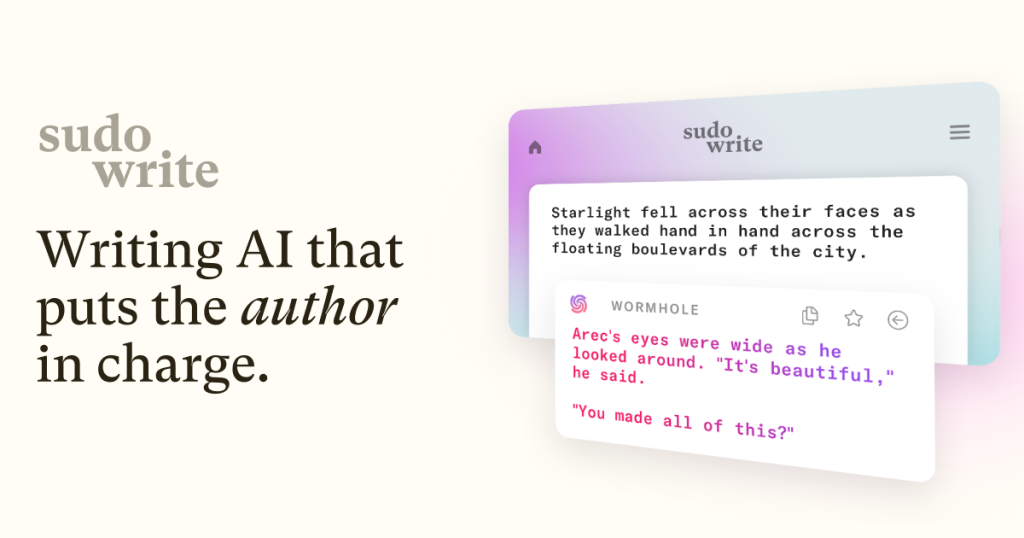
The current English page for Sudowrite is still too thin for what Sudowrite’s own materials now show. The official homepage checked on April 18, 2026 does not present the product as a general AI writer for everything. It presents Sudowrite as the Best AI Writing Partner for Fiction. That framing matters because the right way to judge Sudowrite is by whether it helps authors sustain creative momentum across scenes, chapters, outlines, and character work instead of asking it to behave like an office-writing or grammar-only tool.

Annotated reference image based on the official Sudowrite homepage highlighting fiction-first writing support
The homepage matters because Sudowrite’s strongest fit is fiction writing and creative momentum, not generic office copy.

The official Muse page sharpens that fiction-first positioning even more. Sudowrite says Muse is the only AI model made for fiction and that it is designed for authors. That matters because fiction writers often care about voice, scene flow, characterization, and emotional continuity in ways that ordinary business-writing models do not prioritize. Muse gives Sudowrite a clearer product identity than a writing service that only layers a simple interface on top of general-purpose models.

Annotated reference image based on the official Sudowrite Muse page highlighting a fiction-specific model
The Muse page matters because fiction-specific model positioning is one of Sudowrite’s clearest differentiators.

The Plugins page also changes how the product should be understood. Sudowrite says it offers a library of over 1,000 custom-built tools, and it also says users can build their own custom AI-powered writing tools in minutes. That matters because fiction writing rarely happens in one mode. A writer may need brainstorming, description help, line revision, structural thinking, and other kinds of assistance at different stages of the same project. The plugins surface makes Sudowrite feel more like a creative workflow environment than one static prompt box.

Annotated reference image based on the official Sudowrite plugins page highlighting more than one thousand custom tools
The plugins page matters because Sudowrite’s usefulness depends partly on how many specific writing jobs it can cover beyond one chat window.

The official AI Novelist page shows that Sudowrite is also trying to help before drafting becomes paragraph-level prose. The page title says it can transform ideas into 10 chapter outlines, and the description says users can get 2 to 3 character arcs from a story idea. That matters because many authors stall before the first strong chapter exists. If the outline is muddy or the character movement is weak, a scene-level assistant alone will not solve the actual writing problem.

Annotated reference image based on the official Sudowrite AI Novelist page highlighting chapter outlines and character arcs
The AI Novelist page matters because Sudowrite is also trying to help with story structure before chapter drafting begins.

The Writing Assistant page keeps Sudowrite grounded in active drafting work. The official description says it is a smart writing assistant for fiction writers and highlights story development and plot structure. That matters because the strongest real use case is often not asking for a whole book in one prompt. It is asking for help moving a chapter, scene, beat, or narrative decision forward when the manuscript has started to slow down.

Annotated reference image based on the official Sudowrite writing assistant page highlighting fiction drafting support
The writing assistant page matters because Sudowrite is most useful when it helps authors keep drafts moving, not when it pretends to finish the whole book for them.

The Creative Writing Assistant page says even more directly that Sudowrite is an AI fiction tool. Its description highlights story plots, narrative development, and character arcs. That matters because it keeps the product away from the shallow idea that all writing assistants solve the same job. Sudowrite is clearly aiming at fiction problem solving, especially when writers need help exploring possibilities without giving away authorship.

Annotated reference image based on the official Sudowrite creative writing assistant page highlighting narrative development and character arcs
The creative writing page matters because Sudowrite keeps declaring itself as a fiction tool, not a generic copywriting service.

The Story Generator page shows the same fiction focus from the ideation side. Sudowrite says users can get 5 unique plots with detailed summaries and 3-act breakdowns. That matters because some writing projects are blocked long before revision or line editing. They are blocked at the level of premise, direction, or plot scaffolding. Sudowrite is trying to help with that early-stage friction as well, which makes the platform broader than a scene expander alone.

Annotated reference image based on the official Sudowrite story generator page highlighting plot ideas and three act breakdowns
The story generator page matters because Sudowrite is also trying to solve the blank-page and weak-premise problem at the start of a project.

The official marketing pages repeatedly say Sudowrite is trusted by 22,000+ writers, but trust is not only about social proof. The main site also exposes a visible FAQ page. That matters because writers who are moving live stories and long drafts into a cloud service need more than feature pages. They need a support and expectation-setting surface that tells them the product is meant to be used seriously over time, not just tried once and forgotten.

Annotated reference image based on the official Sudowrite FAQ page highlighting a visible support surface
The FAQ matters because writers need an official place for practical questions before committing a live project to the service.

The Pricing page helps keep the decision honest. Sudowrite exposes plan language including Hobby & Student, Professional, and Max. That matters because a fiction-writing tool can feel exciting in the first week and still be the wrong long-term fit if recurring usage and plan structure do not match the writer’s actual drafting rhythm. The strongest evaluation is not whether Sudowrite feels impressive once, but whether its plan model makes sense over the life of a real project.

Annotated reference image based on the official Sudowrite pricing page highlighting plan structure for different writer workloads
The pricing page matters because Sudowrite only makes sense long term if its plans match the writer’s actual drafting workload.

The Privacy Policy matters for the same reason. Fiction writers may upload unfinished manuscripts, outlines, scene experiments, or other material they are not ready to expose widely. Sudowrite keeps a visible privacy-policy route under its main domain, and that matters because manuscript trust and data handling are part of the real decision. A cloud fiction-writing tool should be judged not only on inspiration and speed, but also on whether it feels safe enough for live creative work.

Annotated reference image based on the official Sudowrite privacy policy page highlighting trust and manuscript handling concerns
The privacy page matters because manuscript trust and data handling are part of the real decision, not just features and prompts.

Our grounded judgment is that Sudowrite is most worth keeping for novelists, fiction writers, and story-first creators who need help brainstorming, outlining, expanding scenes, exploring alternatives, and keeping long-form creative work moving. It is a weaker fit for users who mainly want factual writing, offline editing, or a lightweight proofreading helper. Sudowrite looks strongest when the real bottleneck is creative momentum inside fiction, because that is where its official product surfaces stay most coherent.

Setup / Usage Guide

Installation steps, usage guidance, and common notes are maintained here.

The best way to start with Sudowrite is to treat it as a cloud fiction-writing workspace instead of as a generic AI text toy. Sudowrite's official materials checked on April 18, 2026 show the clearest first-run path: understand the fiction-first positioning, bring in one real story problem, test only a small part of the manuscript first, and keep the tool only if it helps you move the work forward without flattening your own voice.

  1. Start from the official homepage at https://sudowrite.com/ so the evaluation begins inside Sudowrite's own product, pricing, and support chain.
  2. Read the Muse page early. Sudowrite says Muse is the only AI model made for fiction, and that tells you the product is supposed to be judged on creative writing support, not on generic productivity output.
  3. Open the Pricing page before you move real manuscript work into the service. Subscription fit matters more here than it does for a disposable novelty tool.
  4. Use the official web app entry at https://editor.sudowrite.com/app when you are ready to test it. Sudowrite is primarily a browser-based writing environment rather than a standalone Windows installer.
  5. Bring in one real story problem for the first session. A stuck scene, thin outline, weak character turn, or uncertain plot direction is a better test than a completely empty prompt.
  6. Start small. Let Sudowrite touch one scene, one chapter plan, or one narrative problem before you allow it anywhere near large sections of a manuscript.
  7. If you are still early in the project, test the AI Novelist or Story Generator style workflows first. Those are more useful when the block is structural or idea-related rather than sentence-level.
  8. If the project already exists, use the fiction-focused assistant surfaces to explore alternatives, expand scenes, or test character direction. Judge the tool on whether it creates useful options, not on whether every generated paragraph is ready to keep.
  9. Look at the Plugins ecosystem only after the basic writing flow makes sense. The large tool library can be valuable, but it is easier to evaluate once you understand the core drafting experience.
  10. Keep a manual editing pass after every useful output. Sudowrite should support authorship, not replace it. Voice drift, shallow emotional beats, and overly smooth prose are all reasons to revise heavily.
  11. Read the official FAQ when account, billing, workflow, or support questions appear. That is the right place to resolve practical uncertainty instead of guessing from scattered third-party comments.
  12. Check the Privacy Policy before uploading sensitive manuscript work, ghostwriting material, or anything that carries rights or confidentiality concerns.
  13. Finish the trial with one practical decision: does Sudowrite genuinely help you keep a fiction project moving, or is it only interesting in short bursts? Keep it only if it improves momentum on real story work.

A practical Sudowrite setup usually means starting from the official homepage, Muse page, and pricing page, then testing one real fiction problem inside the browser app before branching into outlines, story generation, or the larger plugin library. That order gives Sudowrite the fairest evaluation and makes it much easier to tell whether the product deserves a place in an actual long-form writing workflow.

Related Software

Keep exploring similar software and related tools.