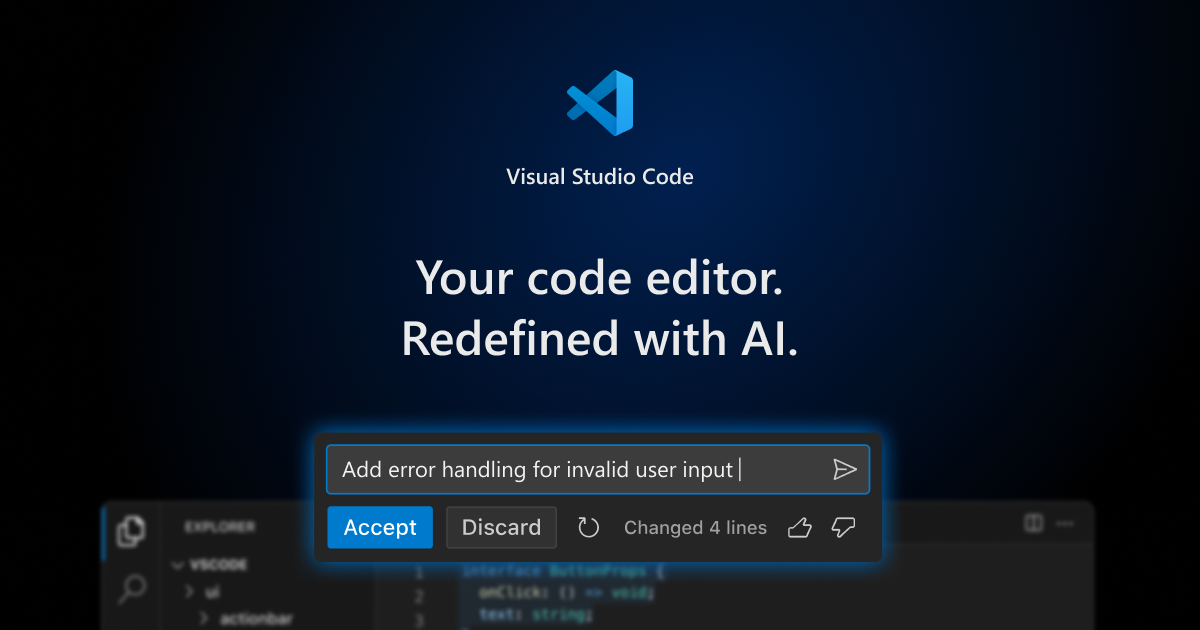
Visual Studio Code remains easy to recommend because it sits in a rare middle ground: powerful enough for serious engineering work, but not so heavy that it feels locked into one stack or workflow. Out of the box it already covers editing, debugging, terminals, Git, extensions, and workspace organization, and that is before users tailor it for specific languages or teams.
As an editor choice, VS Code is strongest for developers who want flexibility without committing to a more specialized IDE for every task. If you are searching for the best code editor for web development and daily programming, it still deserves its reputation because it adapts well to modern workflows across JavaScript, Python, cloud tooling, markdown, containers, and remote development. The main caution is extension sprawl. It is easy to turn a fast editor into a cluttered environment if every problem gets solved by another plugin.
Our recommendation is to start with the stable build and keep the extension list focused. Visual Studio Code is most effective when it stays clean, responsive, and tailored to the work you actually do rather than every possible feature you might someday need.