Subsection Navigation

Switch between child sections to keep browsing the matching software lists.

AI Chat Software List

This list follows the subsection ranking order for easier browsing and detail-page access.

Doubao by ByteDance

Doubao by ByteDance

Doubao by ByteDance is a web-first AI workspace that combines chat, AI creation, research, podcast, meeting, music, and data-analysis surfaces inside one Chinese-language entry point. Its real strength is convenience: the official Doubao web app lets users inspect several practical workflows quickly from one interface, but some deeper modules still depend on sign-in and the specialist tools are best treated as fast starting points rather than full replacements for dedicated software.

AI Tools 2026-03-28
Zhipu Qingyan

Zhipu Qingyan

Zhipu Qingyan is the public GLM-5 AI workspace from Zhipu AI, built as more than a simple Chinese chat box. Its real value comes from combining general conversation with visible mode choices, AI drawing, AI reading, agent templates, and role-based GLM-Claw workflows inside one official web interface, while still being honest that some deeper routes remain sign-in-gated.

AI Tools 2026-03-28
DeepSeek

DeepSeek

DeepSeek works best as a reasoning-first AI assistant for coding, debugging, technical explanation, and structured problem solving. As of April 9, 2026, the clearest public version trail is still the official DeepSeek change log, where DeepSeek-V3.2 remains the latest openly documented API line, while the iOS app is already on version 1.8.2 and early-April community discussion suggests quieter web-side improvements beyond the public notes. That split matters: if you want the live consumer experience, judge the web chat with your own prompts; if you need a version fact you can verify, trust the official change log first. For most users, the web entry is still the best place to start, the app is a convenience client, and the API only makes sense when you need repeatable workflows or integration.

AI Tools 2026-03-28
Qwen by Alibaba

Qwen by Alibaba

Qwen by Alibaba is a general-purpose AI assistant built on the broader Qwen ecosystem developed in China by Alibaba. It works well for drafting, rewriting, summarizing, outlining, and everyday knowledge work, so it is more useful as a serious productivity tool than as a casual chat demo. The bigger reason it matters is strategic: the Qwen family has become one of the world's leading open-source AI model ecosystems, which gives this product long-term relevance for users who want both a practical AI workspace and a direct window into a major global open-model stack.

AI Tools 2026-03-28
Tencent Yuanbao

Tencent Yuanbao

Tencent Yuanbao is a Chinese AI assistant built for everyday question handling, document reading, short-form drafting, and routine productivity support. It feels most suitable for users who want a mainstream Chinese-language AI tool that is easy to enter and practical to keep open during normal work instead of only for specialist tasks. For most people, the best Tencent Yuanbao version to start with is the official web app, while the mobile app is more useful as a follow-up companion once the product already fits your daily workflow.

AI Tools 2026-03-28
Xiaomi MiMo Studio

Xiaomi MiMo Studio

Xiaomi MiMo Studio is Xiaomi MiMo's web-first public demo platform for trying MiMo chat experiences, model showcases, and related developer-facing AI workflows, with official positioning that explicitly says it is a model showcase platform rather than a formal general-purpose AI assistant. Its real value is as an exploration entry point into the broader MiMo ecosystem, where public chat, flagship model demos, OpenClaw deployment messaging, and Xiaomi's open reasoning and multimodal model cards come together in one place.

AI Tools 2026-04-04
Baidu ERNIE Bot

Baidu ERNIE Bot

Baidu ERNIE Bot is a Chinese AI assistant built around Baidu's ERNIE model family and is most relevant for users who want a mainstream Chinese-language tool for question answering, drafting, summarization, and everyday knowledge work. It is easier to understand as a broad web-based assistant than as a narrow specialist product. For most users, the best way to start with Baidu ERNIE Bot is the official web interface, because it provides the clearest first checkpoint for judging writing quality, response style, and daily usefulness.

AI Tools 2026-03-28
MiniMax Agent

MiniMax Agent

MiniMax Agent is the public AI workspace from MiniMax and is best approached as a general-purpose browser-based assistant for ideas, writing, planning, and broader agent-style task support. Compared with a simple chat demo, it is more interesting as a product window into MiniMax's larger model ecosystem and product direction. For most users, the right way to evaluate MiniMax Agent is to start with the official web workspace first and judge whether the browser experience is useful enough to earn repeat use.

AI Tools 2026-03-28
Microsoft Copilot

Microsoft Copilot

Microsoft Copilot is an AI assistant for users who want everyday help with writing, search-style questions, planning, idea generation, and Microsoft-connected workflows without learning a specialist tool first. It is especially suitable for Windows users and people already close to Microsoft's account ecosystem. Its practical value comes from easy access and a broad general-purpose role, while the tradeoff is that its usefulness depends on how much you want a mainstream assistant versus a more specialized AI product.

AI Tools 2026-03-28
Nano AI

Nano AI

Nano AI is a Chinese all-in-one AI workspace focused on multi-agent task handling, search, reports, presentations, and content generation from a single prompt. It is a practical fit for users who want one platform to gather information and turn it into usable output such as reports, PPT drafts, or AI-generated media.

AI Tools 2026-03-28
Manus

Manus

Manus is most useful when it is judged as an action-oriented AI work platform that tries to execute tasks, automate workflows, and produce finished deliverables rather than only return polished chat answers. The official homepage, pricing page, AI web app builder, AI design page, Nano Banana Pro slides page, Browser Operator page, Wide Research page, Mail Manus page, Slack integration page, and Manus API introduction checked on April 19, 2026 all point to a product built around doing work across several channels instead of acting like one narrow prompt box. That positioning matters because Manus is clearly trying to turn AI into an execution layer. The homepage says Manus goes beyond answers to execute tasks, automate workflows, and extend human reach. The web app builder matters because Manus says it can launch full-stack business applications without engineering resources. The design and slides pages matter because Manus is also packaging visual and presentation output. Browser Operator, Mail Manus, and Slack matter because the product is trying to work inside authenticated browser sessions, inbox-driven tasks, and team communication instead of only inside one website. Wide Research and the API matter because Manus is also selling scale and integration, not only convenience. What keeps Manus worth considering is this spread of official surfaces. It can be approached through a hosted interface, a pricing and access path, app building, design generation, slide creation, browser automation, parallel research, email intake, Slack workflow output, and a documented API. That makes Manus more defensible as a broad work-execution system than a simple research chatbot or a single-purpose AI creator. Our grounded judgment is that Manus is strongest for users and teams who want AI to handle multi-step execution across research, browser work, deliverable creation, and workflow integration under one account-based service. It is a weaker fit for users who only want a small offline desktop utility, one narrow single-purpose creative app, or a fully local open tool with no hosted service layer. Manus looks most defensible when the real need is to move work forward across several channels instead of only asking for ideas in a chat window.

AI Tools 2026-03-28
Poe

Poe

Poe is a multi-model AI platform for users who want one place to access many leading text, image, video, and audio models instead of managing separate sites for each one. It is especially useful for comparison-heavy workflows because the platform supports different bots, user-created bots, and multi-bot conversations inside the same product.

AI Tools 2026-04-04
SenseChat by SenseTime

SenseChat by SenseTime

SenseChat is a Chinese-language AI assistant from SenseTime aimed at everyday writing, office, learning, and general productivity tasks. It is especially useful for users who want a practical Chinese-first assistant that can help with outlines, summaries, draft writing, coding prompts, and light creative work inside one easy entry point.

AI Tools 2026-04-04
Chatbox AI

Chatbox AI

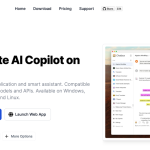
Chatbox AI is most useful when it is judged as a cross-device AI client and copilot rather than as a single hosted chatbot page. The official homepage, Windows download route, Guide page, Help Center, user overview, model-pricing page, login page, privacy page, terms page, and official GitHub releases checked on April 19, 2026 all point to a product built to sit between users and many AI models across desktop, mobile, web, and different provider APIs. That positioning matters because Chatbox AI is clearly trying to solve a client-layer problem instead of building one closed AI service. The homepage says it is compatible with many cutting-edge AI models and APIs and is available on Windows, macOS, Android, iOS, Web, and Linux. The Guide and Help Center show that setup and troubleshooting are part of the official path. The model-pricing page matters because provider cost differences affect real use when one client can connect to many models. What keeps Chatbox AI worth considering is its practical software shape. It has direct platform downloads, a web app, account login, legal pages, and a public GitHub release trail. That makes it feel more like maintained client software than a thin AI landing page. For users who want a consistent interface for multiple providers and devices, that client layer can be more useful than repeatedly switching among vendor-specific web tools. Our grounded judgment is that Chatbox AI is strongest for users who want one AI client across Windows, macOS, Linux, mobile, and web while keeping flexibility across different models and APIs. It is a weaker fit for users who only want one vendor's official chat page, a fully offline local-only tool, or a product with zero account and service layers. Chatbox AI looks most defensible when the real problem is managing multi-model AI access in one place, not finding the most specialized interface for a single provider.

AI Tools 2026-04-04
Lingguang AI

Lingguang AI

Lingguang AI is a Chinese multimodal assistant from Ant Group aimed at everyday work and life tasks such as chat, writing, translation, image generation, and lightweight coding help. It is most useful for users who want one Chinese-first AI entry point for frequent practical tasks instead of collecting separate tools for each small need.

AI Tools 2026-04-04
ChatWise

ChatWise

ChatWise is a desktop AI chatbot built for fast multi-model chatting with local data storage, multimodal input, and a privacy-friendly desktop workflow. It is most useful for heavy AI users who want one stable client for ChatGPT, Claude, Gemini, DeepSeek, local files, and ongoing conversations instead of living in many browser tabs.

AI Tools 2026-04-04