RAGFlow
Category AI Coding
Published 2026-04-05

Overview

This section highlights the core features, use cases, and supporting notes.

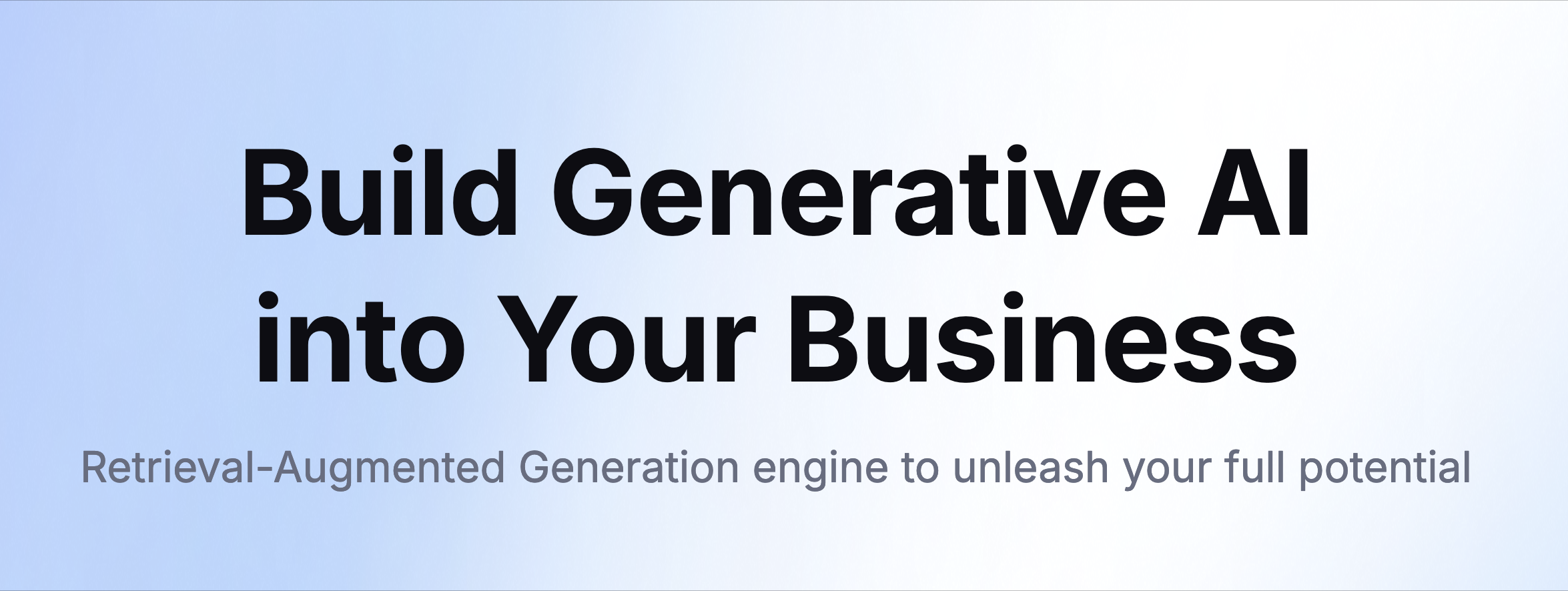
RAGFlow is an open-source RAG engine and context platform for teams that want more reliable document grounding, retrieval quality, and enterprise-ready context handling for AI agents. It is most useful when a knowledge-powered AI system needs better structure than a basic document upload and chat wrapper can provide.

RAGFlow is aimed at the context layer behind knowledge-aware AI systems. Its value comes from helping teams build retrieval and grounding more deliberately so agents and assistants can work with enterprise documents more reliably.

It suits teams building internal knowledge assistants, document QA systems, enterprise search experiences, and context-heavy AI products. The fit becomes strongest when the challenge is not only chatting over files, but managing retrieval quality and dependable grounding.

What makes RAGFlow worth attention is that weak context handling ruins otherwise capable AI systems. A platform that takes retrieval and document structure seriously can improve answer quality more than switching models ever will in some workflows.

The tradeoff is that strong RAG infrastructure still requires careful evaluation. Ingestion, chunking, ranking, permissions, and answer validation all need tuning and continued ownership.

This site recommends RAGFlow for teams that want a more serious foundation for knowledge-driven AI than a light demo stack can provide. Start with one document domain and one retrieval use case, then keep it if the platform improves grounding without making the system harder to operate.
Setup / Usage Guide

Installation steps, usage guidance, and common notes are maintained here.

  1. Open RAGFlow from the official site and define one document-backed assistant use case first. A focused knowledge task is the right first benchmark.
  2. Load a limited, well-understood document set before scaling ingestion. Early quality matters more than early volume.
  3. Inspect how documents are parsed and retrieved. In RAG systems, context quality matters more than surface-level chat smoothness.
  4. Test a few questions where you already know the source answer. This is the fastest way to judge whether retrieval is trustworthy.
  5. Watch for hallucinated certainty or weak grounding signals. Strong context infrastructure should reduce those problems, not hide them.
  6. Review permissions and enterprise constraints before broader rollout. Document tools create risk quickly when access rules are unclear.
  7. Refine the retrieval setup before blaming the model for every weak answer. RAG quality often lives in the context layer decisions.
  8. Keep RAGFlow if it gives your team a noticeably stronger and more controllable context foundation for knowledge-driven AI. That is the main reason to keep it.

Related Software

Keep exploring similar software and related tools.